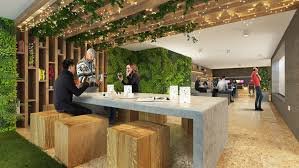
There’s a certain kind of quiet confidence in walking into a building that feels… intentional. The air is lighter, the light is softer, and somewhere in the background, you sense that this place was designed with care — not just for aesthetics, but for impact.
That’s often the promise behind green buildings. Energy efficiency, lower environmental footprint, healthier living spaces — it all sounds compelling. But step beyond the sustainability narrative, and a more practical question emerges: does all of this actually translate into higher property value?
What “Green” Really Means in Real Estate
Before getting into value, it helps to understand what qualifies a building as “green.”
Related reportShared Walls, Shared Lives: Are Co-Living Spaces Really Worth It?
It’s not just about adding a few plants in the lobby or installing LED lights. Certified green buildings typically follow specific standards — things like efficient water usage, optimized energy consumption, better insulation, sustainable materials, and improved indoor air quality.
Certifications such as LEED, IGBC, or GRIHA act as third-party validations. They signal that the building meets certain environmental benchmarks, which can be reassuring for both buyers and investors.
But beyond the certification badge, the real question is: do people care enough to pay more?
Related reportOwning a Piece of Property Without Buying One: The Real Story Behind Real Estate Crowdfunding in India
Buyers Are Becoming More Aware
A few years ago, sustainability was more of a “nice-to-have.” Now, it’s slowly shifting into a deciding factor — especially among younger buyers and corporate tenants.
People are more conscious about long-term costs. A slightly higher upfront investment might make sense if it leads to lower electricity bills, reduced maintenance, and better living conditions over time.
There’s also an emotional layer. Owning or renting a space that aligns with environmental values feels… right. It’s not always easy to quantify, but it influences decisions more than we admit.
Where Value Starts to Show
So, does certification actually impact pricing?
In many cases, yes — but not always in a straightforward way.
Certified green buildings often command a premium, particularly in urban markets where awareness is higher. Commercial properties, in particular, tend to benefit more. Companies are willing to pay extra for office spaces that support sustainability goals and improve employee well-being.
That said, the premium isn’t universal. It depends on location, market maturity, and how well the benefits are communicated to buyers.
This is where the conversation around Green buildings certification ka property value par impact becomes interesting. It’s not just about the certification itself, but how that certification is perceived and understood in a given market.
Operational Savings Play a Big Role
One of the strongest arguments in favor of green buildings isn’t the resale value — it’s the ongoing savings.
Lower energy consumption means reduced utility bills. Efficient water systems cut down on waste. Better construction quality often leads to fewer repairs over time.
For many buyers, especially in residential segments, these savings can outweigh the initial cost difference. It’s a long-term perspective, but one that’s gaining traction.
And when these benefits are clearly communicated, they can indirectly boost property value by making the asset more attractive.
Not All Markets Respond the Same Way
It’s worth noting that the impact of green certification varies widely across regions.
In cities like Mumbai, Bangalore, or Delhi NCR, where awareness is relatively high, green buildings tend to perform better in terms of both demand and pricing. Buyers here are more likely to understand and appreciate the value proposition.
In smaller cities or less mature markets, the story can be different. Certification might not carry the same weight, simply because buyers are more focused on location, price, and immediate usability.
This doesn’t mean green buildings don’t matter there — just that the value isn’t always reflected in pricing right away.
The Developer’s Perspective
From a developer’s point of view, going green involves additional planning, costs, and coordination.
Sustainable materials, energy-efficient systems, and certification processes all add to the initial investment. The expectation, of course, is that these costs will be recovered through higher selling prices or faster absorption rates.
Sometimes that works beautifully. Other times, it takes longer for the market to catch up.
It’s a bit of a calculated risk — one that more developers are willing to take as sustainability becomes a stronger selling point.
Beyond Price: The Intangible Benefits
Here’s something that often gets overlooked: not all value is financial.
Green buildings tend to offer better indoor environments — improved air quality, natural lighting, and thermal comfort. These factors contribute to overall well-being, productivity, and even mental health.
For commercial spaces, this can translate into happier, more efficient employees. For residential buyers, it means a healthier living experience.
These benefits might not show up directly in property prices, but they influence demand — and demand, over time, shapes value.
A Shift That’s Still Unfolding
The relationship between green certification and property value isn’t fixed. It’s evolving.
As awareness grows and environmental concerns become more urgent, the importance of sustainable buildings is likely to increase. What feels like a premium feature today could become a baseline expectation tomorrow.
And when that happens, the value equation might shift significantly.
So, Is It Worth It?
If you’re looking at it purely from a short-term investment perspective, the answer might be… it depends.
But if you take a longer view — considering operational savings, market trends, and the growing importance of sustainability — green buildings start to make a lot more sense.
They’re not just about higher prices. They’re about better spaces, smarter living, and a more thoughtful approach to development.
And in a world that’s slowly waking up to the cost of ignoring sustainability, that kind of thinking might turn out to be more valuable than we realize.