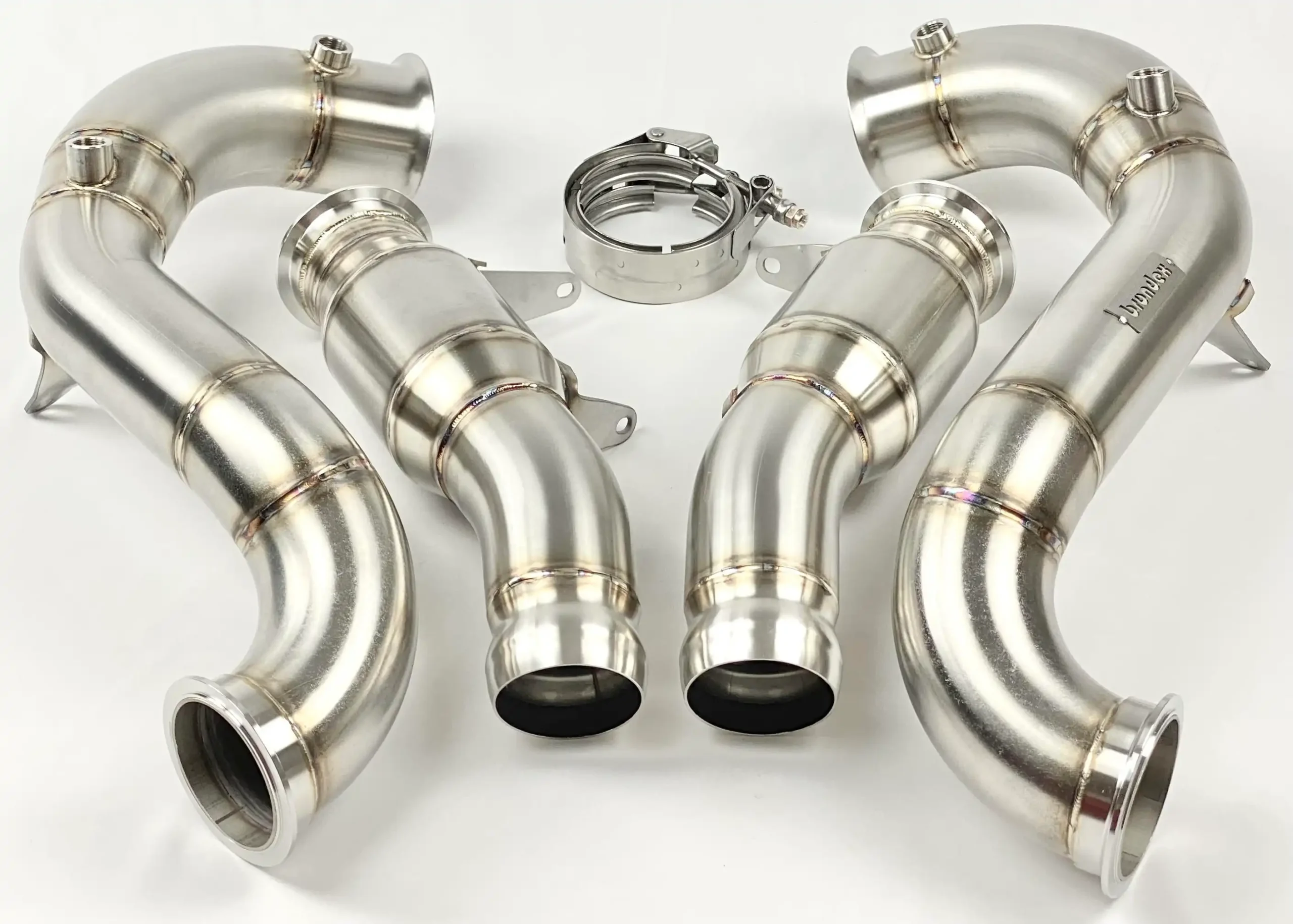
Mercedes-AMG vehicles are built to deliver an impressive combination of luxury, technology, and serious performance. From the aggressive GT63 to the refined E53 AMG and powerful E63 W213, these cars offer strong foundations for enthusiasts who want to personalize their driving experience. One of the most discussed exhaust upgrades is the installation of performance downpipes.
A well-designed downpipe can change the character of a turbocharged vehicle by improving exhaust flow and creating a more aggressive exhaust sound. However, choosing the right system requires more than simply selecting the loudest option. Fitment, construction quality, tuning requirements, emissions regulations, and installation should all be carefully considered.
Understanding the Role of Performance Downpipes
The downpipe is a critical section of a turbocharged exhaust system. It carries exhaust gases away from the turbocharger and toward the rest of the exhaust. Factory systems are generally designed to balance emissions compliance, noise levels, reliability, and everyday comfort.
Performance downpipes may use a less restrictive design to improve exhaust flow. Depending on the complete vehicle setup, this can influence turbo response, exhaust tone, and overall driving characteristics. Results can vary significantly depending on supporting modifications and engine calibration.
For this reason, Mercedes-AMG owners should focus on a complete and properly engineered setup rather than expecting a single modification to transform every aspect of performance.
Mercedes GT63 X290 Downpipe Options
The Mercedes-AMG GT63 X290 is a high-performance four-door model that combines dramatic styling with substantial power. Owners looking to make the exhaust system more responsive often explore mercedes gt63 x290 downpipes as part of a wider performance package.
Fitment is particularly important because modern AMG vehicles have tightly packaged engine bays and sophisticated exhaust components. A properly designed system should match the specific vehicle configuration and be manufactured from materials capable of handling extreme operating temperatures.
Installation should also be approached carefully. Incorrect fitment or poor-quality components may lead to leaks, unwanted vibrations, or compatibility problems. Working with an experienced Mercedes performance specialist can help ensure that the installation is completed correctly.
Exploring Downpipes for the Mercedes E53 AMG
The Mercedes E53 AMG offers a distinctive blend of performance and everyday usability. Its turbocharged powertrain makes it an appealing platform for enthusiasts who want sharper throttle response and a more pronounced exhaust note without losing the comfort expected from a premium vehicle.
A downpipe mercedes e53 amg upgrade can be considered when building a more customized exhaust system. The right option should be selected according to the exact model year, engine configuration, and intended use of the vehicle.
Owners should also understand whether additional software calibration or supporting modifications may be required. Modern engine-management systems constantly monitor various operating conditions, so changes to the exhaust system can affect how the vehicle responds electronically.
Mercedes E63 W213: Catted and Catless Choices
The Mercedes-AMG E63 W213 remains a favorite among performance enthusiasts because of its powerful engine and ability to combine comfort with extraordinary acceleration. Exhaust modifications are often used to give the car a more aggressive personality.
When considering mercedes e63 w213 catted and catless downpipes, it is important to understand the differences between the two designs. Catted options generally include catalytic converters, while catless systems remove them. The choice can affect exhaust sound, emissions, vehicle diagnostics, and legal road use.
Catless systems may not be legal for public-road use in many areas and can trigger warning lights or require additional modifications. Owners should always check applicable emissions laws and regulations before purchasing or installing any emissions-related exhaust component.
Quality, Installation, and Compatibility
High-performance vehicles deserve carefully engineered components. When comparing downpipe systems, buyers should look beyond marketing claims and consider material quality, weld construction, heat resistance, fitment accuracy, and manufacturer reputation.
Professional installation can also make a major difference. Experienced technicians understand how to work around sensors, heat shielding, turbocharger connections, and other components found in modern AMG vehicles. A proper inspection after installation can help identify leaks or fitment issues before they become larger problems.
Final Thoughts
Downpipe upgrades can be an exciting way to personalize the sound and performance characteristics of a Mercedes-AMG. Whether modifying a GT63 X290, E53 AMG, or E63 W213, the best results usually come from selecting quality components that are specifically designed for the vehicle.
Before making any modification, confirm compatibility, understand potential tuning requirements, and review local emissions and road-use laws. With proper planning and professional installation, a performance exhaust upgrade can become a well-integrated part of a carefully built Mercedes-AMG project.