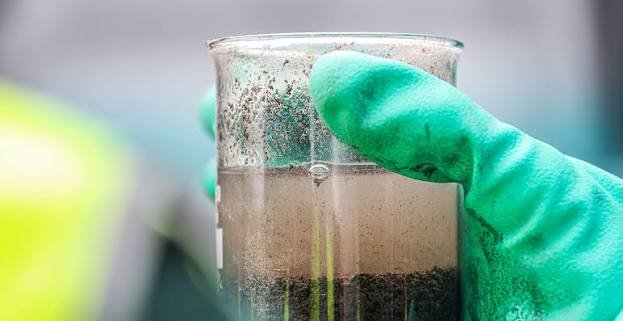
Water may look perfectly clean in a glass, but appearance only tells us so much. There can be substances dissolved in water that aren’t visible, don’t settle at the bottom, and may not have an obvious smell. That’s one reason water quality can be a surprisingly complicated subject.
For most people, the goal isn’t to become a chemist. It’s simply to understand what may be affecting the water coming into the home and what practical steps can be taken when there is a genuine concern.
From common disinfectants to industrial compounds, different substances require different approaches. Testing the water first is usually the smartest place to begin.
Why Water Quality Deserves Attention
Water can pick up substances as it moves through soil, groundwater, treatment facilities, storage systems, and plumbing. The source matters, too. Municipal water and private well water have different monitoring and management considerations.
Some changes are easy to notice. Water might taste different, develop an unusual odor, or leave deposits around fixtures. Other concerns can’t be detected by sight, smell, or taste at all.
That’s why water testing is more reliable than simply judging what’s in your glass.
Understanding PFOA and PFAS
PFOA is one member of a much larger group of manufactured compounds known as PFAS. These substances have been used in a wide range of industrial and consumer applications because of their resistance to heat, water, and grease.
The term PFOA & PFOAS is sometimes used casually when discussing PFAS-related water concerns, although PFOA refers to a specific compound rather than the entire PFAS family.
If PFAS contamination is a concern in a particular water source, testing can help determine whether these compounds are present and at what levels. Treatment should then be selected based on the actual situation rather than assumptions.
Some specialized filtration technologies can reduce certain PFAS compounds, but performance depends on the specific technology, water chemistry, and operating conditions.
Why Testing Comes Before Buying Equipment
It’s tempting to see a water-treatment advertisement and immediately think, “That’s what I need.”
But water problems aren’t always that simple.
A system designed to reduce one type of contaminant may not be effective against another. Even systems marketed for broad categories of substances have specific performance limits.
Testing gives you a baseline. Once you know what’s present, you can investigate treatment options that have been designed and tested for those particular concerns.
That approach usually makes more sense than purchasing equipment first and hoping it solves the problem.
Everyday Chemicals Can Enter Water in Different Ways
The word chemicals can sound alarming, but it’s important to remember that everything around us is made of chemicals, including water itself.
The real question is which substance you’re talking about, how much is present, and what level of exposure may matter.
Household products, industrial materials, fuels, agricultural activities, and other sources can contribute different substances to water under certain conditions. Private wells may be particularly influenced by nearby land use and groundwater conditions.
This is why a specific identification is much more useful than simply saying that water contains “chemicals.”
Chlorine Has an Important Role in Water Treatment
Chlorine is commonly used as a disinfectant in public water systems because it helps control harmful microorganisms as water travels through distribution networks.
Some people, however, don’t enjoy the taste or smell of chlorinated water. You may notice it more strongly when filling a glass, making coffee, or taking a shower.
A noticeable chlorine taste doesn’t automatically mean the water is unsafe. In many cases, it’s simply a sensory issue associated with the treatment process.
For households that want to improve taste and odor, certain filtration technologies, particularly appropriately designed activated-carbon systems, can help reduce chlorine and related compounds.
What About Private Well Water?
Private well owners have a different set of responsibilities because their water isn’t generally managed through the same centralized municipal treatment process.
Well water can be affected by surrounding land use, groundwater conditions, septic systems, flooding, agricultural activity, and changes in the local environment.
Regular testing is a practical way to understand what’s happening beneath the surface.
If your water suddenly changes taste, smell, or appearance, don’t automatically assume the problem will disappear on its own. Testing can help identify whether the change is simply aesthetic or whether further investigation is warranted.
Choosing the Right Filtration Method
There are several types of water-treatment technologies, and each has a different purpose.
Activated carbon can be useful for certain tastes, odors, and organic compounds. Reverse osmosis can reduce many dissolved substances. Ion exchange is used for specific water chemistry concerns, while specialized media can target particular contaminants.
PFAS treatment, for example, requires equipment that has demonstrated performance for the relevant compounds and conditions.
The best system isn’t necessarily the one with the most stages. It’s the one that has been properly matched to the water.
Don’t Confuse Filtration With Disinfection
This distinction is easy to overlook.
Filtration and disinfection are not always the same thing. A filter may physically remove particles or reduce certain dissolved substances, while disinfection technologies are intended to control microorganisms.
If bacteria or other biological contaminants are a concern, the appropriate treatment approach may be very different from the system used for chlorine taste or dissolved chemicals.
Again, testing and professional assessment can prevent a lot of confusion.
Maintenance Matters More Than People Think
Even a high-quality water-treatment system needs regular attention.
Filters have a limited capacity. Carbon media eventually becomes exhausted. Reverse osmosis membranes require maintenance and replacement. Other systems have their own service schedules.
Ignoring these requirements can reduce performance.
Before buying a system, ask how often components need replacement, what they cost, and whether professional service is recommended. It’s much better to know those details beforehand than discover them after installation.
Be Skeptical of “Removes Everything” Claims
Water-treatment marketing can sometimes make complicated chemistry sound remarkably simple.
A claim that one system removes “all contaminants” should make you pause and ask questions.
What contaminants were tested? At what concentrations? Under what conditions? How long does the treatment media remain effective? What happens when the filter reaches capacity?
Specific information is much more useful than a broad promise.
A reputable provider should be able to explain what a system does and, just as importantly, what it doesn’t do.
Making a Sensible Water-Treatment Decision
The smartest approach is usually straightforward.
First, understand your water source. Next, test for the concerns that are relevant to your situation. Then compare treatment technologies based on verified performance, maintenance requirements, installation, and long-term cost.
Don’t buy equipment simply because a particular term sounds scary. At the same time, don’t ignore a genuine concern because the water looks perfectly clear.
Good decisions come from good information.
The Bottom Line
Water quality is rarely about one single substance. Different water sources can contain different characteristics, and each treatment challenge needs to be considered on its own.
Whether you’re concerned about PFOA and PFAS compounds, household or industrial chemicals, chlorine taste, or something else entirely, testing provides a much stronger starting point than guesswork.
The goal isn’t to make your water treatment unnecessarily complicated. It’s to understand what you’re dealing with, choose technology designed for that purpose, and maintain it properly.
When you take that approach, water quality becomes much less intimidating. Instead of worrying about every unfamiliar term on a filtration label, you can focus on what actually matters: knowing your water and making informed choices for the people and equipment that depend on it.