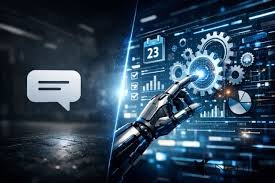
For a long time, chatbots felt like the future. You’d land on a website, a small chat window would pop up, and there it was—ready to answer your questions. Sometimes helpful, sometimes… not so much. But still, it felt like progress.
Now, though, the conversation is changing again. You’ll hear terms like “AI agents” being thrown around, often in the same breath as chatbots. And at first glance, they can seem similar. Both talk, both respond, both try to help.
But scratch the surface a little, and the difference becomes clearer. Not dramatic, not flashy—but meaningful.
The Chatbot Era: Structured, Predictable, Limited
Let’s start with chatbots, because they’ve been around longer.
Traditional chatbots are designed to follow scripts. You ask a question, they match it to a predefined response or a set of rules. If your query fits within that structure, great—you get an answer quickly. If it doesn’t, things can go sideways.
We’ve all been there. Typing “I want to change my delivery address” and getting a response about return policies. It’s not that the bot is broken—it just doesn’t understand context the way a human would.
Even more advanced chatbots, powered by AI, still often operate within boundaries. They’re reactive. They wait for input, process it, and respond. That’s their core function.
Enter AI Agents: A Different Kind of Intelligence
AI agents, on the other hand, are built with a broader purpose.
They don’t just respond—they act.
Think of them less like a helpdesk assistant and more like a digital teammate. They can take goals, break them down into tasks, and execute those tasks across systems. Sometimes even without constant human prompting.
For example, instead of just answering “What’s the status of my order?”, an AI agent could check your order, identify a delay, contact support, and notify you—all in one flow.
It’s not just conversation anymore. It’s action.
AI agents vs chatbots: real difference kya hai aur use cases
At a basic level, the difference comes down to depth and autonomy.
Chatbots are designed for interaction. They’re great at handling queries, guiding users through processes, and providing quick information. Customer support, FAQs, booking confirmations—these are their comfort zones.
AI agents go a step further. They’re designed for execution. They can handle multi-step tasks, integrate with different tools, and make decisions based on context and data.
In terms of use cases, chatbots are ideal for front-line communication. They reduce workload, improve response times, and handle repetitive queries efficiently.
AI agents, meanwhile, are better suited for complex workflows—automating business processes, managing operations, even assisting in decision-making.
It’s not about one replacing the other. It’s about different roles.
Where Chatbots Still Shine
Despite all the buzz around AI agents, chatbots aren’t going anywhere.
They’re simple, cost-effective, and easy to deploy. For many businesses, especially smaller ones, a well-designed chatbot is more than enough. It solves real problems without requiring heavy infrastructure.
And let’s not forget—sometimes, you don’t need complexity. If a customer just wants to know your store hours or track a package, a chatbot does the job perfectly.
There’s value in simplicity.
The Power (and Complexity) of AI Agents
AI agents, while powerful, come with their own challenges.
They require more sophisticated systems. Integration with databases, APIs, workflows—it’s not plug-and-play in the same way chatbots often are.
There’s also the question of control. When an AI agent is making decisions or taking actions, you need safeguards. Clear boundaries, monitoring, and sometimes human oversight.
But when implemented well, the payoff can be significant.
Imagine an agent that manages your calendar, schedules meetings, sends follow-ups, and even prepares summaries—all without you micromanaging every step. That’s where things start to feel less like automation and more like augmentation.
A Shift in Expectations
What’s interesting is how user expectations are evolving alongside these technologies.
People are no longer satisfied with basic responses. They want solutions. Quick, seamless, and ideally, without having to repeat themselves multiple times.
This shift is pushing businesses to rethink how they use AI.
It’s not just about answering questions anymore. It’s about reducing effort for the user.
And that’s where AI agents have an edge.
The Middle Ground: Blending Both
In reality, most systems today don’t choose one over the other—they combine both.
A chatbot might handle initial interactions, gather information, and then pass control to an AI agent for more complex tasks. It’s a layered approach, where each component plays to its strengths.
This hybrid model is practical. It balances efficiency with capability.
And honestly, it feels like the direction things are heading.
So, What Should You Focus On?
If you’re thinking from a business perspective, the choice depends on your needs.
If your primary goal is to handle customer queries efficiently, a chatbot is a solid starting point. It’s reliable, scalable, and relatively straightforward.
If you’re looking to automate processes, reduce manual work, and create more dynamic systems, AI agents are worth exploring.
But jumping straight into complexity without a clear use case can backfire. Sometimes, starting simple and evolving gradually works better.
The Bigger Picture
At the end of the day, both chatbots and AI agents are tools. Different tools for different jobs.
The real shift isn’t just technological—it’s conceptual. We’re moving from systems that respond to systems that act.
And that changes how we think about interaction itself.
Because when technology starts doing more than just answering—when it starts helping, anticipating, even taking initiative—it stops feeling like a tool and starts feeling like something closer to a partner.
Not perfect, not fully there yet. But moving in that direction, one step at a time.